My Child Has Molluscum. Do We Need a Dermatologist?
My Child Has Molluscum. Do We Need a Dermatologist?
You noticed one small bump on your child’s skin.
Then there were three.
Now you’re finding them on another part of the body, and every time you think they are finally going away, another one seems to appear.
If you have already Googled pictures, asked other parents, bought something online, or spent weeks wondering whether you should just leave the bumps alone, you are not the only parent who has been in this position.
The bumps may be molluscum contagiosum, a common viral skin infection in children.
And one of the biggest questions parents have is:
Does my child actually need dermatology care for molluscum?
The answer is not always yes. Molluscum can eventually clear without treatment. But there are also times when having someone evaluate your child’s skin, explain what is happening, and help you decide what to do next can save you a lot of uncertainty.
Sometimes what a parent needs most is not another Google search.
It is guidance from someone they trust.
First: What Does Molluscum Look Like?
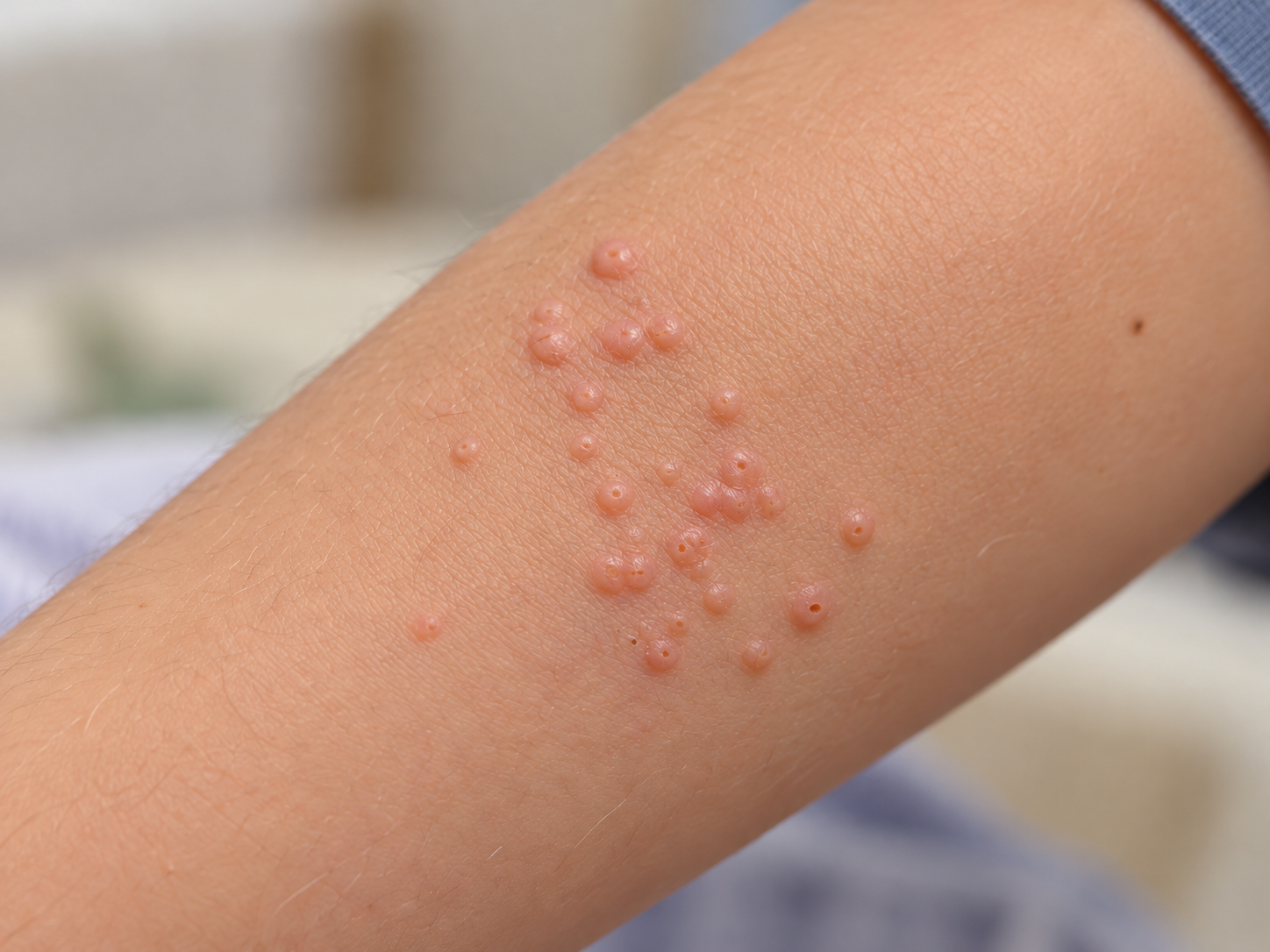
Molluscum contagiosum typically causes small, firm bumps on the skin. They can be skin-colored, pink, or lighter in appearance and often have a small indentation in the center.
Children may have only a few bumps or many of them.
Molluscum is caused by a virus and can spread from one area of the skin to another. It can also spread through direct skin-to-skin contact or through shared objects.
Molluscum can also be particularly frustrating in children who have eczema. Itchy, irritated skin can encourage scratching, which may contribute to spreading the bumps to additional areas.
Does Molluscum Have to Be Treated?
Not always.
For many healthy children, the immune system eventually clears molluscum without treatment.
According to the American Academy of Dermatology, molluscum often clears on its own, although this can take months and sometimes longer.
That means “watch and wait” can be a legitimate medical plan.
But there is a difference between deciding to monitor molluscum after your child has been evaluated and simply waiting because you are unsure what the bumps are or what you should do.
A dermatology visit can help answer questions such as:
- Are these bumps actually molluscum?
- Is it reasonable to monitor them?
- Is my child’s eczema contributing to the problem?
- What can we do to reduce irritation or spreading?
- Is treatment worth considering?
- What should make me follow up?
You deserve more than being told, “It will probably go away.”
You should understand why you are waiting and what you should be watching for.
When Should I Get Dermatology Care for My Child’s Molluscum?
You may want your child evaluated if you are not certain that the bumps are molluscum in the first place.
You may also want professional guidance when the bumps are spreading quickly, becoming very bothersome, occurring along with eczema, appearing in a sensitive area, or simply causing enough concern that you are no longer comfortable managing the situation on your own.
And sometimes the reason for seeking dermatology care is much simpler:
You are a parent, you are concerned, and you want to know what you are looking at.
That is a valid reason to have your child’s skin evaluated.
Why Are the Bumps Suddenly Red and Angry Looking?
This one scares a lot of parents.
A molluscum bump that had been sitting there quietly may suddenly become red, swollen, crusted, or inflamed.
It is easy to assume that means something has gone terribly wrong.
But inflammation does not always mean the bump is infected. Molluscum lesions can become inflamed as the immune system begins responding to the virus.
That does not mean every red or painful bump should be ignored. If you are seeing significant pain, drainage, rapidly increasing redness, or something simply does not look right to you, having it evaluated can help determine what is happening.
Should I Try to Remove Molluscum at Home?
Be careful here.
When your child has had the bumps for months, it is understandable to start searching for anything that promises to make them disappear.
But picking, squeezing, scraping, or trying to remove molluscum yourself can irritate the skin, potentially spread the virus, and increase the risk of skin injury or scarring.
The Centers for Disease Control and Prevention advises that physical removal should be performed by a trained healthcare professional. The American Academy of Dermatology also cautions parents about nonprescription molluscum products that may irritate the skin or cause unwanted reactions.
Treatment is not one-size-fits-all.
A dermatology care plan may include monitoring, medical treatment, skin-care guidance, and coordination with other care providers when necessary.
The right approach depends on your child’s age, skin, number and location of lesions, other skin conditions, and how much the molluscum is affecting them.
What If My Child Also Has Eczema?
This is especially important.
Molluscum and eczema can become a frustrating combination because itchy, irritated skin may encourage scratching, while scratching can contribute to spreading the virus to additional areas.
Clinical dermatology references, including Andrews’ Diseases of the Skin, describe molluscum occurring in children with atopic dermatitis.
If your child has both conditions, the conversation should not only be about removing bumps.
You also need guidance about the health of the surrounding skin.
That is another reason individualized dermatology care can make a difference.
Looking for Molluscum Dermatology Care in Houston?
If you are a Houston-area parent staring at a collection of mystery bumps and wondering whether you should keep waiting, start treatment, or do something completely different, you do not have to figure it out alone.
Go Skin Check provides mobile dermatology care throughout Greater Houston for children and adults with medical skin concerns, including molluscum.
Your child’s Go Skin Check visit includes an in-person assessment and clinical imaging, with a board-certified dermatologist on the care team for diagnosis and treatment.
Our goal is not to rush you into treatment.
It is to help you understand what is happening with your child’s skin, answer your questions, explain your options, and give you a plan you feel comfortable following.
Because sometimes the most reassuring answer is not simply:
“Yes, that’s molluscum.”
It is:
“Here’s what it is. Here’s what we can do. And here’s what you should watch for next.”
If you are ready for answers and a plan, schedule a Go Skin Check dermatology visit for your child.
References
1. American Academy of Dermatology. Molluscum contagiosum: Diagnosis and treatment.
2. American Academy of Dermatology. Molluscum contagiosum: Overview.
3. Centers for Disease Control and Prevention. Clinical Overview of Molluscum Contagiosum.
4. James WD, Berger TG, Elston DM. Andrews’ Diseases of the Skin: Clinical Dermatology. 12th ed. Elsevier; 2016.
5. Taylor SC, Kelly AP, Lim HW, Anido Serrano AM, eds. Taylor and Kelly’s Dermatology for Skin of Color. 2nd ed. McGraw-Hill Education; 2016.